
Brand Architecture Explained: 4 Models and How to Choose
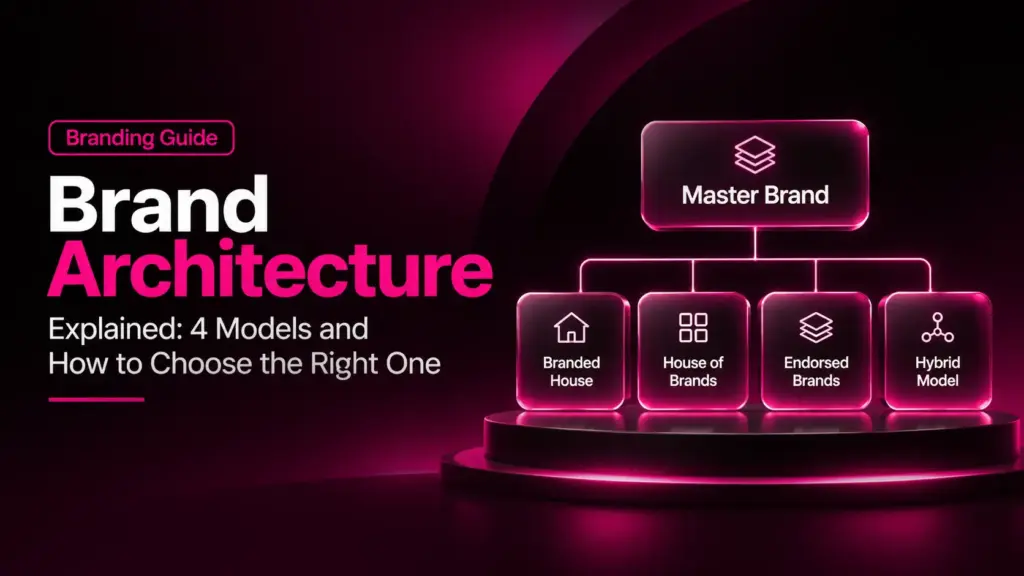
One business, three product lines, and five different names: which brand should customers remember? If your offerings are growing faster than your brand system, customers may struggle to understand what belongs together. That is a brand architecture problem—and it can affect everything from navigation and packaging to marketing spend.
Brand architecture is the way a company organizes and connects its corporate brand, product brands, service lines, and sub-brands. It clarifies which names lead, which brands stand independently, and how they relate to one another.
What Is Brand Architecture?
Think of brand architecture as a map of your business from the customer’s perspective. It answers three practical questions: What does this company offer? Which offerings belong together? And what does the parent brand guarantee?
A clear architecture can make your portfolio easier to explore. It also gives internal teams rules for launching products, naming services, and keeping messaging consistent. It does not automatically increase sales; the value depends on how accurately the structure reflects customer needs.
4 Common Brand Architecture Models
1. Branded House: One Name Leads
In a branded house, one master brand is prominent across offerings. For example, a fictional company called Northstar could sell Northstar Design, Northstar Cloud, and Northstar Support under a shared name and visual system.
Best for: businesses whose services share customers, reputation, and a common promise. Trade-off: a reputation problem or confusing extension in one area can influence perceptions of the whole brand.
2. House of Brands: Independent Identities
A house of brands keeps product or business identities largely separate from the parent company’s public identity. Each brand can speak to a different audience and build a distinct market position.
Best for: portfolios serving very different audiences or categories. Trade-off: separate identities usually require more coordination and resources.
3. Endorsed Brands: Independence With a Connection
An endorsed brand has its own name and positioning while signaling a relationship with a parent brand. A hypothetical example is “Harbor Studio, by Northstar.” The endorsement may help communicate credibility without removing the sub-brand’s distinct personality.
Best for: companies that need distinct offerings but want to retain a visible connection to the parent. Trade-off: endorsement must be consistent and meaningful to customers.
4. Hybrid Architecture: A Practical Mix
Some portfolios use a combination: closely related services under the main brand, a specialist offering with endorsement, and a separate brand in another market. This is often described as hybrid architecture.
Best for: organizations with a varied portfolio or complex history. Trade-off: without documented rules, a hybrid model can become difficult to manage.
Branded House vs. House of Brands: A Quick Comparison
| Question | Branded House | House of Brands |
|---|---|---|
| Primary identity | Shared parent name | Independent brand names |
| Audience overlap | Often substantial | Can be limited |
| Marketing approach | Coordinated umbrella message | Distinct brand messages |
| Management challenge | Protecting overall consistency | Supporting separate identities |
These are planning patterns, not rigid rules. For more context, see Shopify’s overview of brand architecture.
How to Choose the Right Brand Architecture
Start With Your Customers, Not Your Org Chart
List your most important customer segments, what each group buys, and whether they expect the same experience. If two services appeal to the same buyer and reinforce a shared promise, a common brand may be easier to understand. If their audiences and value propositions differ sharply, separation may be more useful.
Audit Every Brand and Offering
Document the names currently in use, what each stands for, where it appears, and who owns the relationship with customers. Look for overlapping promises, inconsistent naming, and unclear product categories.
Design Rules for Future Growth
Create a simple decision framework: when does a new offer use the parent name, become a sub-brand, receive an endorsement, or need a separate identity? Agree on visual and verbal rules before the next launch. NielsenIQ discusses the role of audience research and decision frameworks in brand architecture planning.
What This Means for Small Businesses
You do not need a large portfolio to benefit from clarity. A US service company might offer consulting, implementation, and training. One consistent brand with clearly named service categories could be more useful than three unrelated logos. An international e-commerce business launching into a different customer category may need to test whether the original brand promise still fits.
Before paying for new visual identities, settle the relationship between your offerings. The Virtual Minds Brand Architecture services connect market positioning, brand messaging, identity design, and creative direction around those decisions.
Brand Architecture FAQs
Is brand architecture the same as brand identity?
No. Architecture defines relationships among brands and offerings. Brand identity expresses a brand through elements such as names, typography, colors, and visual systems.
When should a business review its architecture?
Consider a review before launching a major product line, entering a new market, acquiring another business, or reorganizing several confusing services.
Can a small business use a branded house?
Yes. A small company with related offerings can use one recognizable parent brand and straightforward service names.
Make Your Brand Easier to Understand
A thoughtful structure is not about creating more logos. It is about helping customers understand what you offer and why it belongs together. If your portfolio needs a clearer direction, contact The Virtual Minds to discuss your branding goals.
