
PPC Management Services: A Practical Guide to Better Paid Search Campaigns
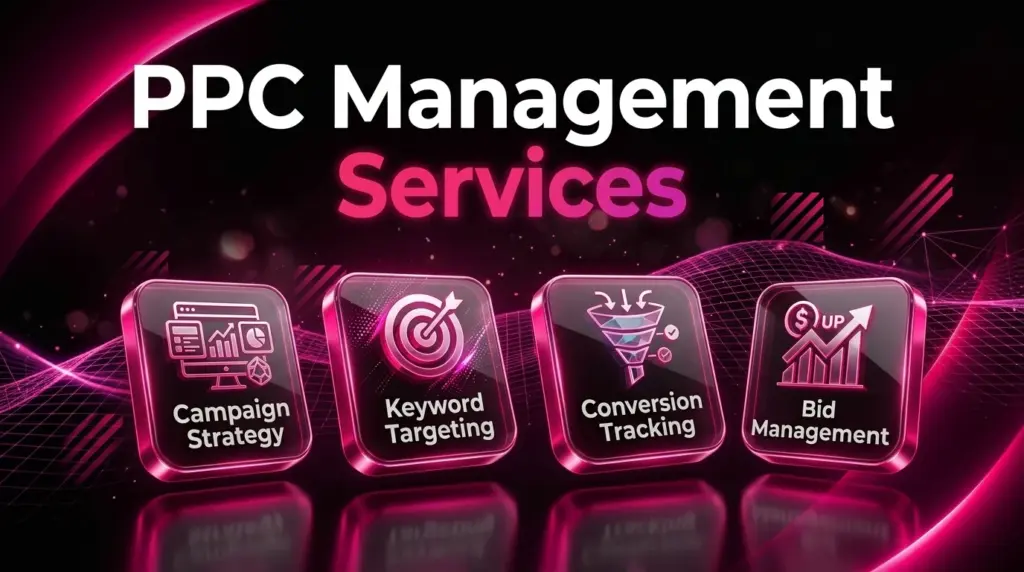
Pay-per-click advertising can attract high-intent prospects, but launching ads is only the beginning. Without a clear account structure, relevant keywords, accurate conversion tracking, and regular search-term reviews, a campaign can spend money without generating valuable business results. That is where professional PPC management services become useful.
This guide explains what a PPC manager actually does, which tasks should be included in an engagement, and how businesses in the United States and international markets can evaluate campaign performance. The focus is on search advertising fundamentals, with notes that also apply to related paid media formats.
What Are PPC Management Services?
PPC management services cover the planning, operation, monitoring, and improvement of paid advertising campaigns in which clicks are commonly a key billing mechanism. Scope can include Google Ads, Microsoft Advertising, and other suitable paid platforms, depending on the business and target audience.
Management is not simply raising or lowering bids. It involves matching search intent with offers, maintaining accurate tracking, reviewing traffic quality, improving ad relevance, managing exclusions, and helping landing pages convert interested visitors into customers.
What Should Be Included in PPC Management?
1. Account audit and campaign strategy
Before creating new campaigns, review existing performance, targeting, conversion goals, historical search terms, campaign settings, and landing pages. Identify which products or services have sufficient margins and demand to justify paid traffic. A clear strategy defines what success means and which markets deserve initial attention.
2. Keyword research and search intent
Keywords should reflect customer needs, not just search volume. A query containing “near me” can have different intent from “what is” or “how to.” Keyword selection must consider commercial relevance, likely competition, geographic targeting, and the pages available to answer the searcher’s question.
A carefully structured campaign can separate high-intent terms from research-oriented searches where the economics differ. Match types, exclusions, and bidding settings should be reviewed according to platform behavior rather than treated as permanent rules.
3. Ad copy and creative testing
Ads should clearly communicate the offer and set expectations that the landing page can fulfill. Test meaningful differences, such as price transparency, turnaround time, service specialization, or a specific customer benefit. Avoid unverifiable superlatives and promises that the business cannot honor.
4. Search-term monitoring and negative keywords
The keywords you target and the actual searches that trigger ads are not identical. Search-term review helps detect irrelevant demand, reveal new opportunities, and reduce avoidable waste. Negative keywords can help exclude unwanted intent where appropriate, but careless exclusions may block relevant customers.
5. Bid strategy and budget control
Budget decisions should reflect profitability, conversion data quality, and the number of meaningful outcomes available. Automated bidding may be useful when goals and conversion data are reliable. Google’s Smart Bidding documentation explains the importance of conversion tracking for conversion-focused automated bidding.
6. Landing-page experience
A strong campaign can underperform if the landing page loads slowly, lacks pricing context, obscures the next step, or fails on mobile devices. PPC management should include a process for identifying landing-page friction and recommending changes, even if the PPC provider does not personally build the page.
7. Conversion measurement and reporting
Track the actions that matter: purchases, calls, form submissions, or qualified leads. Validate that conversions are not double-counted and that values, where used, are reasonable. Google’s conversion measurement guidance describes how recorded actions support campaign optimization.
Important PPC Metrics Explained
| Metric | Meaning | Limitation |
|---|---|---|
| Click-through rate (CTR) | Clicks divided by impressions | High CTR does not guarantee sales |
| Cost per click (CPC) | Average cost paid for a click | Cheap clicks may be low quality |
| Conversion rate | Share of visitors or ad interactions completing an action | Depends on defining the right action |
| Cost per conversion | Spend divided by tracked conversions | May hide lead-quality problems |
| ROAS | Attributed revenue divided by ad spend | Does not account for all costs or attribution gaps |
| Impression share | Share of eligible impressions received | More share is not always more profitable |
Suppose a campaign spends $1,500 and records 300 clicks. Average CPC is $5. If those visits produce 15 valid leads, the advertising cost per lead is $100. The next question is whether those leads convert to customers at a profitable rate. A PPC report that stops at the first calculation is incomplete.
How to Diagnose an Underperforming PPC Campaign
High clicks, few conversions
Check landing-page relevance, form usability, mobile performance, tracking accuracy, and whether queries match the offer. A mismatch between ad copy and the page can produce interested clicks without meaningful action.
Low conversion cost, poor lead quality
Review conversion definitions, search terms, location settings, and whether the campaign is optimizing for an easy but low-value event. Consider passing qualified lead information back into your reporting where technically and legally appropriate.
Rising costs without clear changes
Examine auction competition, seasonality, targeting changes, creative performance, and site conversion rates. Do not assume that one platform setting is the cause before reviewing the data.
Strong results in one country but weak results elsewhere
Separate the markets for analysis. Language, purchasing behavior, currency, shipping availability, competitor positioning, and local policy requirements may differ significantly. Translating the same ad is not the same as localization.
PPC Management Checklist Before Launch
- Define one primary commercial outcome for each campaign.
- Confirm tracking and test it with real user actions.
- Review geographic targeting and supported service areas.
- Map relevant keyword groups to suitable landing pages.
- Prepare useful, accurate ads that align with the offer.
- Check negative keyword and search-term review plans.
- Confirm budget limits and who may approve changes.
- Document account ownership and user permissions.
- Agree on reporting cadence and how lead quality will be assessed.
Should You Hire a PPC Agency or Manage Ads In-House?
In-house management can work when the business has an experienced specialist, enough time for ongoing testing, and access to design and analytics support. Outsourcing can help when several disciplines are required but hiring a full team is impractical.
Compare the total cost and the operating model. Ask whether creative production, conversion tracking, landing-page work, and reporting are included. A lower management fee is not valuable if the essential work sits outside the contract.
How to Evaluate a PPC Management Provider
Ask for an explanation of how campaigns are audited, how conversion goals are chosen, how search terms are reviewed, and how changes are documented. Request clear ownership terms for accounts and assets. Google Ads’ account access guidance can help you understand permissions before granting an agency access.
Be cautious about guaranteed results, claims of a single universally “best” bidding strategy, or pressure to increase spend before tracking has been verified. Good PPC management is a process of evidence-based decisions, not a set-and-forget service.
Frequently Asked Questions
How often should PPC campaigns be reviewed?
Delivery, spending, and tracking issues may need frequent checks. Strategic performance conclusions need a longer view suited to conversion volume and sales cycle. More changes do not automatically mean better management.
Does PPC management include the advertising budget?
Usually the agency fee and platform media spend are separate, but contracts vary. Ask for a written breakdown of management, setup, creative, and advertising costs.
What is the difference between PPC and performance marketing?
PPC refers to a paid advertising mechanism and its associated campaign management. Performance marketing is a broader outcome-focused approach that can involve multiple paid channels, measurement, and conversion optimization.
Can a small business start with one PPC campaign?
Yes. A focused campaign with relevant search intent and dependable tracking is often easier to learn from than a scattered set of underfunded campaigns.
Final Takeaway
Effective PPC management services combine relevant demand, accurate measurement, disciplined testing, and ongoing budget control. The goal is not merely lower click costs; it is valuable traffic that contributes to sustainable business results.
For broader paid-media planning, explore The Virtual Minds’ performance marketing services or contact the team to discuss PPC campaign requirements.
