
Social Media Content Creation: A Practical 7-Step Strategy
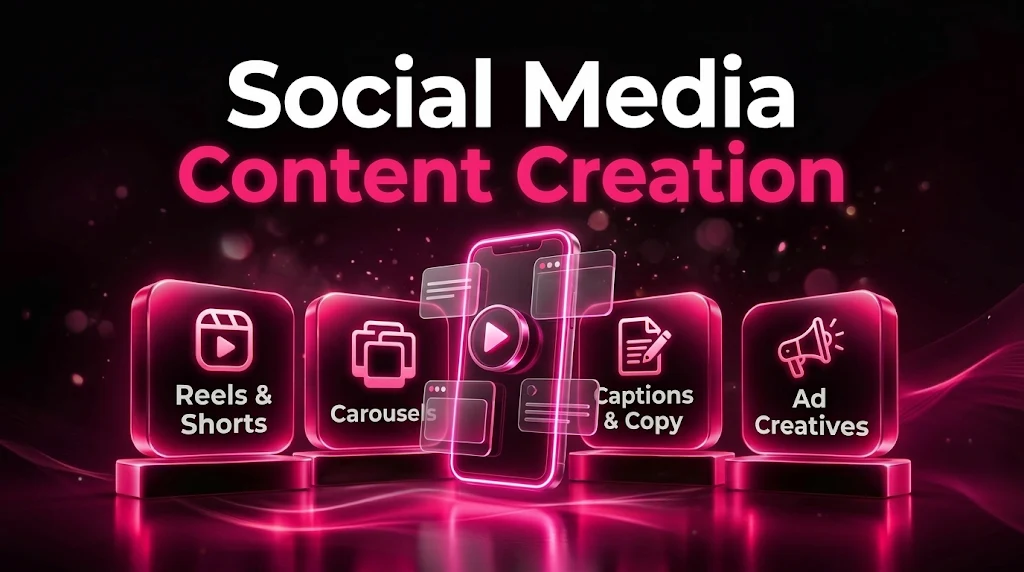
Posting every day is not a strategy. If your feed looks busy but your audience cannot remember your message, a better social media content creation process can matter more than publishing more often.
What Is Social Media Content Creation?
Social media content creation is the process of researching, planning, producing, adapting, and publishing content such as images, carousels, short-form videos, and written posts for social platforms. Its job is to help the right audience notice, understand, and act on a brand’s message.
Effective social content is not just attractive. It should fit the channel, answer a genuine audience need, and contribute to a defined business objective. A sustainable process is especially valuable for small teams serving US and international customers.
A 7-Step Social Media Content Creation Process
Step 1: Choose One Clear Objective
Decide whether the next campaign is designed to introduce your brand, explain a product, build trust, drive qualified website visits, or support customer retention. A single post can have secondary benefits, but one primary objective makes creative decisions easier.
Step 2: Research Your Audience and Their Questions
Use support tickets, customer conversations, search queries, reviews, and platform comments to identify recurring problems. List the phrases people actually use. Avoid treating engagement with broad trends as proof that people want to purchase your product.
Step 3: Select Content Pillars
Content pillars are recurring themes that help a brand stay consistent. A practical mix might include educational answers, product demonstrations, behind-the-scenes stories, useful proof or customer experiences, and clear offers. Only publish testimonials or performance claims you can substantiate and have permission to use.
Step 4: Match the Format to the Message
Use a carousel when a topic benefits from multiple steps, a short-form video when movement or a demonstration improves understanding, a single graphic for a concise announcement, and a longer explanation when nuance matters. Create for the intended platform rather than forcing every idea into the same template.
Step 5: Build a Repeatable Production Workflow
Start with a brief, write the hook and message, prepare the visual or shot list, produce the asset, review facts and brand alignment, then export the correct version. Keep a shared calendar and name files consistently so the same content can be reused responsibly.
Step 6: Adapt, Caption, and Publish
Check aspect ratio, safe text areas, legibility on mobile, caption accuracy, and relevant calls to action. Add meaningful captions or subtitles where possible. Localize offers, spelling, and cultural references when targeting multiple regions. Publishing time alone will not fix a weak idea.
Step 7: Measure and Improve
Review the metric connected to the original goal. For awareness, useful measures may include qualified reach and repeat exposure. For traffic or sales, use tracked links, landing-page behavior, inquiries, and conversions where data is available. Compare similar content and change one major variable at a time.
Which Social Media Formats Work Best for Different Goals?
| Format | Good use | Production tip |
|---|---|---|
| Reels and short videos | Demonstrations, quick explanations, stories | Show the relevant point early; include captions |
| Carousels | Checklists, tutorials, comparisons | Use one idea per slide and readable type |
| Static graphics | Announcements and concise brand messages | Keep hierarchy simple and avoid overcrowding |
| Product photography | Products, details, and lifestyle context | Represent the real product accurately |
| Customer-led stories | Credibility and practical use cases | Obtain permission and avoid exaggerated claims |
How to Create a Simple Monthly Content Calendar
Begin with a manageable publishing schedule rather than copying a competitor’s frequency. Suppose a small business can confidently create eight core posts per month. A sample mix could include three educational posts, two product demonstrations, one behind-the-scenes story, one customer question, and one offer. This is an illustrative planning exercise, not a universal best-practice ratio.
Batch related tasks: research topics together, capture footage in a planned session, edit assets in groups, and leave time for approvals. Maintain flexibility for relevant customer questions or timely business updates. Reuse a useful topic in more than one format without making near-identical posts.
Platform Considerations for US and International Audiences
Instagram: Visual storytelling, Reels, carousels, and product presentation can suit visually oriented brands. LinkedIn: Professional lessons, expertise, and thoughtful business commentary may fit B2B audiences. TikTok: Short, direct demonstrations and culturally relevant storytelling may be appropriate where the audience uses the platform. YouTube Shorts: Short explainers and demonstrations can complement longer video or website content.
These are starting hypotheses, not platform guarantees. Check where your audience already engages. For different markets, review local language, timing, available platform features, and regulatory or claim requirements. The same message may need distinct creative versions.
Common Mistakes That Weaken Social Content
Frequent mistakes include publishing without an objective, copying trends without a brand connection, overloading designs with text, using inconsistent visuals, ignoring captions, and judging performance only by likes. Another mistake is producing content before verifying product details or permissions.
Hootsuite’s social media content creation guide discusses planning and production practices. Use it as a reference, then build a workflow appropriate to your team.
When Should You Outsource Social Media Content Creation?
Outside support can be helpful when your team has ideas but lacks production time, video editing, photography, or design capacity. Before hiring, define the number and types of deliverables, feedback process, licensing, platform versions, and who is responsible for publishing and responding to comments.
The Virtual Minds Content & Culture supports social media visuals, planning, photography, and creative storytelling. For commercial videos and more involved shoots, see Creative Shoots & Production.
Frequently Asked Questions
How often should a brand post on social media?
There is no frequency that works for every brand. Begin with a consistent schedule your team can sustain and adjust based on audience response and business outcomes.
Is social media content creation the same as social media management?
No. Content creation develops the assets. Management can also cover scheduling, comments, community engagement, monitoring, and reporting. Confirm what is included in any proposal.
Do short-form videos always outperform static posts?
No. Format effectiveness depends on audience, goal, creative execution, and platform. Test suitable formats rather than treating one as universally best.
Create Content That Has a Job to Do
If your brand needs a structured content calendar, social visuals, or campaign video, talk to The Virtual Minds about your goals and creative requirements.
